Voix True
News
A Forgotten Wire Led Engineers to a Chip That Could Make AI Far More Efficient
Researchers accidentally discovered that an ordinary silicon transistor can mimic a brain cell, pointing to a new path toward energy-efficient artificial intelligence hardware
Published: July 19, 2026
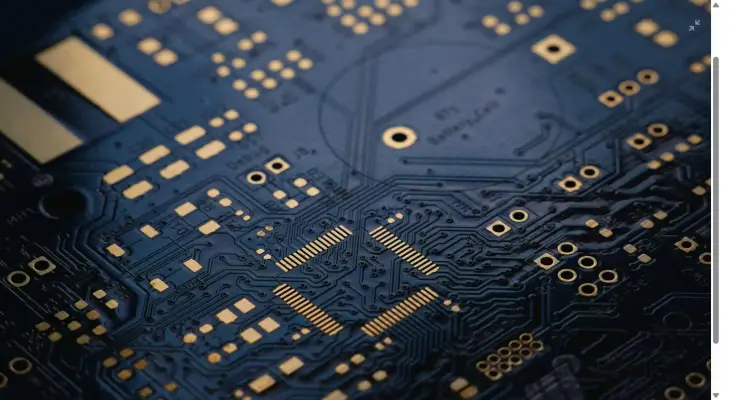
Every time someone asks a chatbot a question or gets a video recommendation, a data centre packed with power-hungry processors is working behind the scenes. A single AI chip can draw as much electricity as a household appliance, and unlike a dishwasher, it runs around the clock. Researchers writing in IEEE Spectrum say a chance discovery in their lab could point to a far more efficient way of building the chips that power artificial intelligence.
Scientists Mario Lanza and Sebastian Pazos, of the same lab, explain that today's AI hardware simulates brain-like neural networks using billions of ordinary transistors, a brute-force approach that consumes enormous amounts of energy. The human brain performs comparable tasks roughly a million times more efficiently, which has pushed researchers toward neuromorphic engineering, the effort to build electronic components that behave more like real neurons and synapses.
The breakthrough came by accident in 2024, when a student measuring a memory circuit forgot to connect a normally unused terminal on a standard transistor. The mistake produced a sudden, brain-like spike of current that relaxed on its own once voltage dropped, a pattern the researchers had never expected from such an ordinary, decades-old component. Follow-up testing showed the effect could be controlled reliably by adjusting the resistance at that terminal.
The team later found that the same transistor could also behave like an artificial synapse, the connection that links neurons and determines the strength of a signal between them, simply by adjusting how charge accumulates inside the device. That means a single, cheap, industry-standard transistor can do work that previously required dozens or even hundreds of components wired together, a discovery the researchers tested across chips from different manufacturers with consistent results.
Because the technique works with existing silicon manufacturing lines rather than exotic new materials, the researchers say it could be scaled up relatively quickly compared with other experimental approaches to brain-inspired computing. They caution that turning the discovery into full working circuits will still require years of engineering, but argue it offers a realistic path toward AI chips that use dramatically less power than today's data-centre hardware.






 New Trump Tariffs on Canadian Goods Raise Cost Concerns for U.S. Homebuilders
2 months ago
New Trump Tariffs on Canadian Goods Raise Cost Concerns for U.S. Homebuilders
2 months ago
 Cape Coral Reclaims Crown as Top Florida Draw for Canadian Snowbirds
2 months ago
Cape Coral Reclaims Crown as Top Florida Draw for Canadian Snowbirds
2 months ago