

Voix True
News
Rebates Revive New Home Sales, But Canada's Condo Market Still Lags
Ontario's HST incentive is filling pre-construction townhomes while towers stall, as BC and national data point to an uneven housing recovery
Published: July 14, 2026
A temporary HST rebate is reshaping demand in Ontario's new-home market, but not evenly. At a recent pre-construction launch in Oshawa, buyers lined up to view stacked townhomes priced from roughly $400,000, and builders reported selling half of the available units within about a week and a half. Industry watchers say the pace of those sales suggests the rebate, which can knock up to $130,000 off an eligible purchase, is doing what it was designed to do for lower-rise housing.
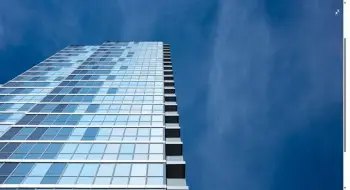
The story looks very different in the condo tower segment. New condo sales in the Greater Toronto Area have run far below their long-term average this year, and only a single new high-rise project has launched so far in 2026. Industry group BILD notes that the rebate has been more effective at clearing out already-built, unsold units than at convincing developers to break ground on new towers.
Part of the problem is structural. Getting a new high-rise off the ground typically requires developers to pre-sell around 70 per cent of units before construction can begin, and many builders say they have little room left to cut prices given how much construction costs have risen since their projects were first planned. Meanwhile, resale condos in Toronto have become noticeably cheaper, with benchmark resale prices down more than 6 per cent from a year earlier and roughly 20 per cent below their 2022 peak, making older units a more attractive option for many buyers even after factoring in the rebate on new construction.
Beyond pricing, confidence plays a role too. Years of delayed and cancelled pre-construction projects have left some buyers wary of brand-new towers, with many now favoring older buildings that offer larger layouts over the compact units that defined the last condo boom. Rollout confusion hasn't helped either: although the rebate expansion was announced in the spring, detailed guidelines weren't released until late June, leaving buyers, lenders and lawyers scrambling to understand how the program would actually work.
Elsewhere in the country, the picture is a little steadier. A recent REMAX Canada report found detached-home sales increased across the majority of communities in the Greater Toronto Area, Greater Vancouver and the Fraser Valley, pointing to renewed appetite for single-family homes even as condo demand lags. In British Columbia, resale activity also edged higher, with roughly 7,225 residential units changing hands through MLS systems in June, up slightly from a year earlier. Nationally, Royal LePage's latest survey pegged the aggregate home price at $814,900 in the second quarter, down modestly year over year but essentially unchanged from the first quarter of 2026.
Taken together, the data suggests Canada's housing recovery is arriving in pieces rather than all at once. Government incentives are clearly moving the needle for lower-rise new construction, and resale and detached-home markets are showing modest signs of life, but the country's high-rise condo sector remains stuck, weighed down by financing hurdles, tight timelines and buyers who increasingly see better value in the resale market. Whether that gap narrows may depend less on price than on rebuilding trust in projects that haven't even broken ground yet.






 New Trump Tariffs on Canadian Goods Raise Cost Concerns for U.S. Homebuilders
2 months ago
New Trump Tariffs on Canadian Goods Raise Cost Concerns for U.S. Homebuilders
2 months ago
 Cape Coral Reclaims Crown as Top Florida Draw for Canadian Snowbirds
2 months ago
Cape Coral Reclaims Crown as Top Florida Draw for Canadian Snowbirds
2 months ago